Who needs to comply
Western Australia has two electrical safety rules that apply whenever a home changes hands or is let out. Around Busselton, with so many holiday homes and short-stay lets, they catch a lot of owners by surprise.
- Sellers, before the home is transferred at settlement
- Landlords of rental homes
- Holiday-let owners, including short-term rental accommodation
- Property managers acting for any of the above
WA smoke alarm rules
- Hard-wired to mains power (a 10-year battery alarm is only allowed where there's no concealed space for wiring)
- Less than 10 years old, working, and meeting Australian Standard AS 3786
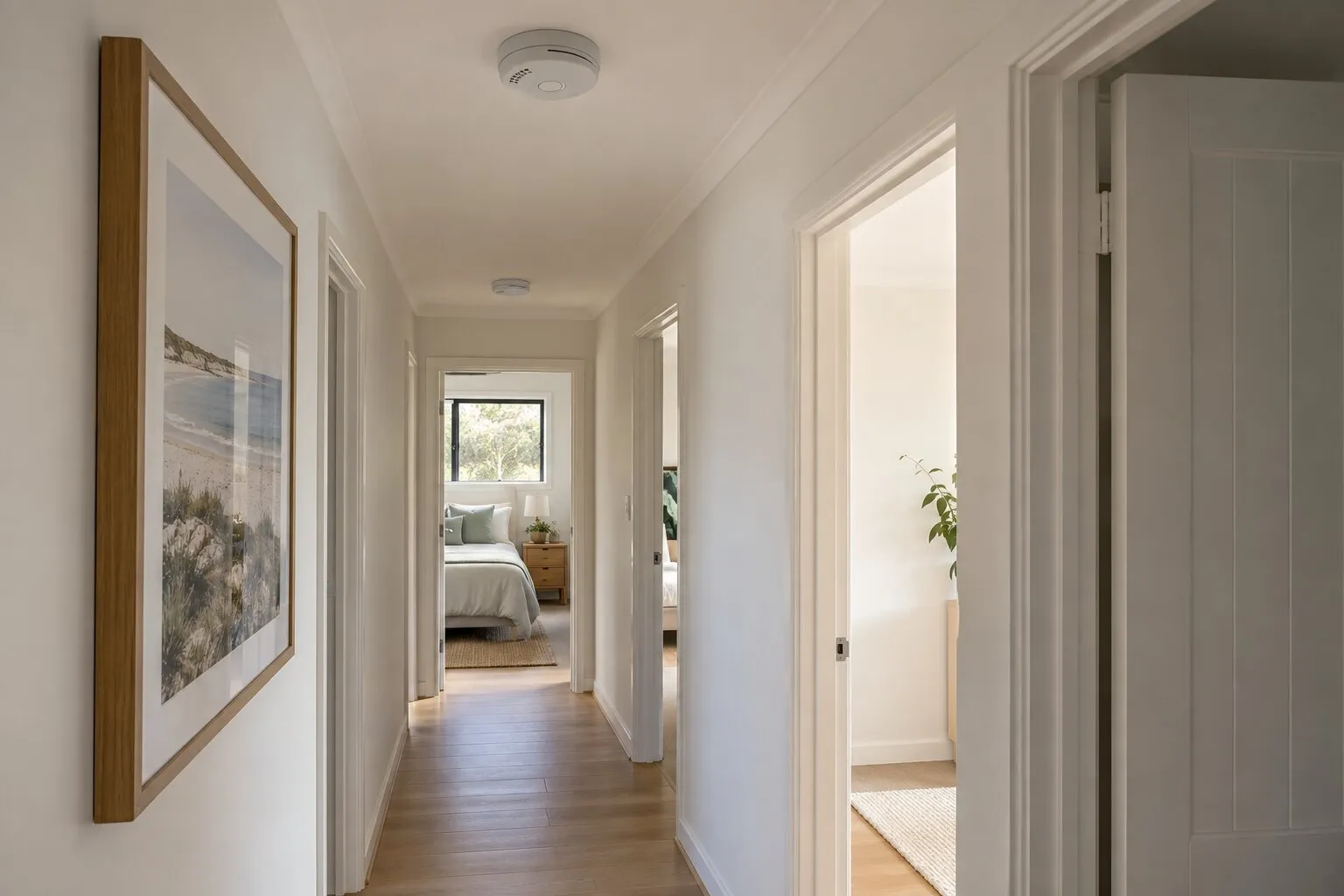
- At least one in the hallway near the bedrooms on every level
- Interconnected in homes built since May 2015
- Required before sale, rent or hire, including short-term rental accommodation
The full rules are on the WA Government's smoke alarm laws page.
Smoke alarm installation
Every smoke alarm has a manufacture date on the back. For a sale, rental or holiday let, WA requires alarms less than 10 years old, even if an older one still beeps when you press the button. Hard-wired alarms are connected to the home's wiring, so only a licensed electrician can install or replace them.
In older homes, it's worth asking about interconnected alarms even where they aren't required. When one alarm detects smoke, they all sound, which matters in a house where you might not hear an alarm at the other end.
WA RCD rules
- At least two RCDs protecting all power point and lighting circuits
- Sellers: in place before the title is transferred at settlement
- Landlords: installed in the switchboard of the rental home
- Short-term rentals: in place before guests stay
The details are on the WA Government's RCD safety switches page.
RCD testing
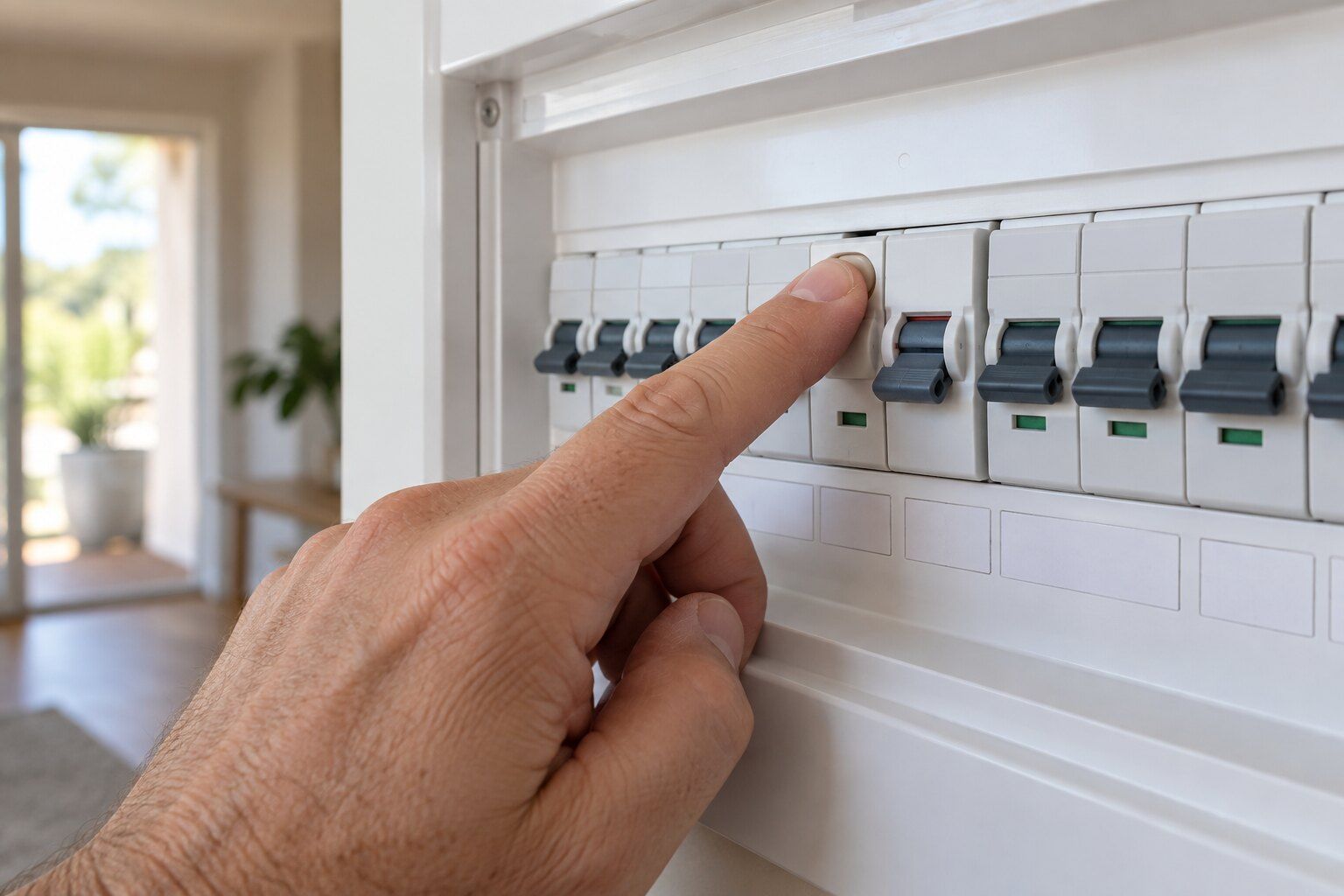
An RCD, or safety switch, cuts the power in a fraction of a second if current leaks to earth, for example through a faulty appliance or a person. WA's electrical safety regulator recommends testing each one every three months, or more often if the manufacturer says so:
- Find the RCDs on your switchboard. Each has a small button marked T or Test.
- Press the button once, without holding it down. The RCD should switch off.
- Switch it back on, then reset any clocks or timers on that circuit.
If an RCD doesn't trip, have a licensed electrician test it and replace it if needed. An electrician can also time how fast each RCD trips with calibrated equipment, which the button test can't show, and add RCDs to circuits that don't have one. If the board is old or full, that may mean a switchboard upgrade.
Before settlement or a new tenancy
Book it early. Your settlement agent will want confirmation that both are in place, and electricians get busy before the summer holiday season. If the work needs an Electrical Safety Certificate, keep it with the sale or tenancy paperwork.
What affects the price
- How many smoke alarms are needed, and whether they're replacing existing hard-wired units
- Ceiling access, especially in two-storey homes or with raked ceilings
- Whether new wiring is needed for interconnection
- How many RCDs are needed, and whether the switchboard has room for them
Common questions
How many smoke alarms do I need?
At least one in the hallway near the bedrooms on every level. Homes with bedrooms in separate wings, or more complicated layouts, often need more. The electrician will check the layout and tell you what's required.
Can I use a 10-year battery smoke alarm instead of a hard-wired one?
Only where there's no concealed space to run the mains wiring, such as some concrete ceilings. Otherwise WA requires alarms permanently connected to mains power.
How often should I test my RCDs?
WA's electrical safety regulator recommends pressing the test button on each RCD every three months, or more often if the manufacturer's instructions say so. If one doesn't trip, have a licensed electrician test it and replace it if needed.
Does a holiday let need compliant smoke alarms?
Yes. The WA smoke alarm rules apply to homes that are sold, rented or made available for hire, and that includes short-term rental accommodation.
Will I get an Electrical Safety Certificate?
For installing work, yes: the electrical contractor must give you one within 28 days of finishing. Maintenance work and like-for-like replacements don't need one, so ask your electrician whether your job does. See having electrical work done on the WA Government site.