The short answer
Unplug everything, reset the switch once, then plug things back in one at a time. If it trips when one appliance goes back on, that appliance is the likely cause, so stop using it. If it trips with nothing plugged in, or won't reset at all, the fault is probably in the wiring, a power point or a light fitting. WA's Building and Energy says that if a safety switch won't stay on after a reset, call a licensed electrical contractor. And whatever the cause, never tape, wedge or hold a safety switch on: that removes the protection it gives you.
Safety switch or circuit breaker?
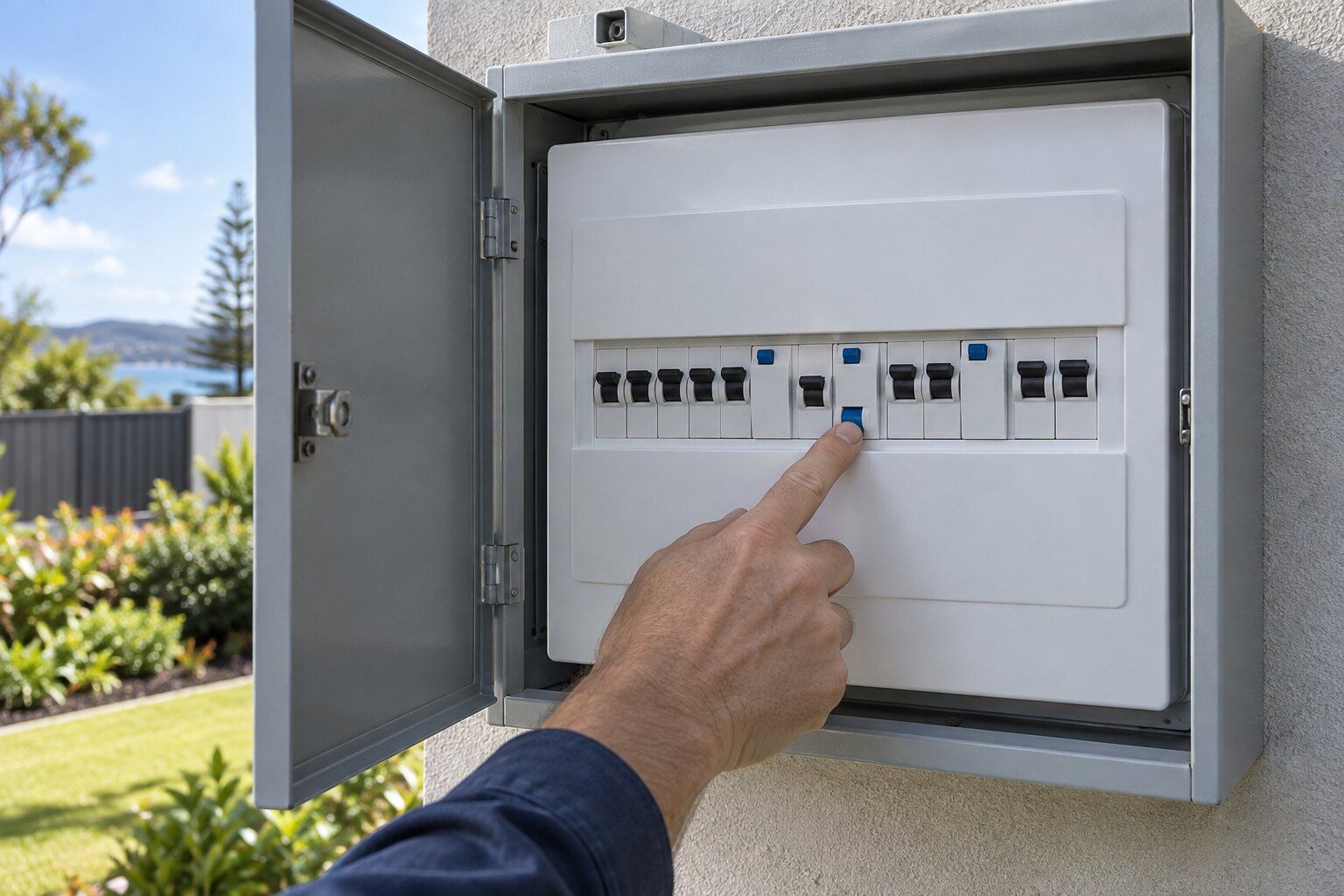
Your switchboard has two kinds of protection, and it helps to know which one has tripped. Building and Energy calls safety switches (RCDs) the single most effective measure against electrocution, serious electrical injury and electrical fire. Circuit breakers do a different job.
Safety switch or circuit breaker: how to tell
| What to know | Safety switch (RCD) | Circuit breaker |
|---|---|---|
| What it protects against | Electric shock. It cuts the power in a fraction of a second when current leaks to earth | Overloads and short circuits, to prevent fires. It won't stop an electric shock |
| How to spot it | A button marked T or Test on the front | No test button |
| What a trip usually means | Current leaking through a faulty appliance, power point, light fitting or cable | Too much current on the circuit, or a short circuit |
From Building and Energy WA, Energy Safe Victoria and Queensland's Electrical Safety Office, checked 27 September 2026. Some devices, called RCBOs, combine both in one, so they can trip for either reason.
A safety switch cuts the power within 0.03 of a second, according to Energy Safe Victoria. Building and Energy says the current needed to kill you is reached well before a fuse blows or a circuit breaker operates, which is why the safety switch matters. A plain RCD doesn't trip because too many things are running at once: an overload trips a circuit breaker, or an RCBO that combines the two.
Step by step: finding the cause
- Check whether it's just your home. If the whole street is dark, it's a network outage. After an outage, Western Power says to check your meter box to make sure the safety switches haven't operated, and to switch them back on if they have.
- Unplug or switch off everything. Every appliance in the house, so nothing is connected when the power comes back.
- Reset the safety switch once. Push it firmly back to on. If a fridge or air-conditioner is on that circuit, Queensland's Electrical Safety Office says to wait two to three minutes first.
- Plug appliances back in one at a time. Turn each one on and wait. If the switch trips, the last thing you connected is the likely cause. Leave it unplugged and stop using it.
- Stop if it trips with nothing plugged in, or won't reset. That points to the wiring, a power point, a light or a fixed appliance such as an oven or hot water system. Leave it off and call a licensed electrical contractor, as Building and Energy advises.
If an appliance is to blame, WA's advice is to stop using it, turn off the power, unplug it and have it checked. Never try to repair it yourself.
Why a safety switch (RCD) keeps tripping
A faulty appliance
Queensland's Electrical Safety Office names a faulty power point or appliance as a typical source of leakage. Anything with a heating element or a motor that sits near water, such as a kettle, washing machine or outdoor equipment, is worth testing first.
Water getting in
A switch that trips when it rains usually means water has got into an outdoor power point, light, garden fitting or cable. Weather seals and covers wear out over time, so it's worth having outdoor fittings checked if the trips line up with wet weather.
Damaged cable
A cable nicked by a drill or a nail, or chewed in the roof space, can leak current. Building and Energy lists rodent-damaged cabling among the hazards in roof spaces. If the trips started after renovation work, mention that to the electrician.
A worn-out safety switch
Safety switches can fail too. Consumer Protection WA says faulty RCDs in rentals must be replaced immediately. If yours is old, or your board has only one or two RCDs covering the whole house, a switchboard upgrade can split the circuits so one fault doesn't take out half the home. See the switchboard upgrade cost guide for published prices.
When to stop and call an electrician
- It won't reset, or trips again straight away with nothing plugged in
- It trips on a circuit with no appliances, such as the lights
- It doesn't switch off straight away when you press the test button
- Lights brighten and dim for no reason, or appliances behave oddly
- You've felt a tingle or shock from a tap, appliance or metal surface
A shock is urgent. Building and Energy says to stop, report it to Western Power on 13 13 51, and get medical attention. You're legally required to report electric shocks in WA. It's also illegal for an unlicensed person to do electrical work in WA, including changes to fixed wiring, so leave power points, switches and fittings to a licensed electrician.
Test your safety switches every three months
Building and Energy says to test each safety switch every three months, or more often if the manufacturer's instructions say so. Press the button marked T: it should switch off straight away. If it doesn't, or won't stay on after you reset it, call a licensed electrical contractor. Tenants should test them every three months too. See smoke alarms and RCDs for the step-by-step test and the rules for sales and rentals.
Common questions
Why does my safety switch keep tripping?
It has detected current leaking to earth, which is what it's there for. Queensland's Electrical Safety Office says leakage can come from a faulty power point or appliance, or from a cable hit while drilling. If it trips again after you reset it, the fault is still there, so find it before you keep resetting.
Why does my safety switch trip when it rains?
Usually because water has got into something outdoors, such as a power point, light, garden fitting or cable, and current is leaking through it. Stop using the outdoor fittings on that circuit and have a licensed electrician find and fix the one letting water in.
Why won't my safety switch reset?
There's probably a fault on the circuit that's still connected. Unplug everything and try again, and wait two to three minutes before resetting a circuit with a fridge or air-conditioner. If it still won't stay on with nothing plugged in, WA's Building and Energy says to call a licensed electrical contractor.
Can a faulty appliance trip the safety switch?
Yes. Queensland's Electrical Safety Office names a faulty appliance as a source of leakage. If the switch stays on until one appliance is plugged in or turned on, stop using that appliance. WA's advice is to turn off the power, unplug it and have it checked rather than repairing it yourself.
Is it safe to keep resetting my safety switch?
No. Reset it once with everything unplugged, and if you find a faulty appliance, stop using it. If it trips again without an obvious cause, Queensland's Electrical Safety Office says to get advice from your electrician. Never tape, wedge or hold a safety switch on, because that removes the protection it gives you.
What's the difference between a safety switch and a circuit breaker?
A safety switch (RCD) protects people from electric shock by cutting the power when current leaks to earth. A circuit breaker protects the wiring from overloads and short circuits. Safety switches have a test button marked T or Test; circuit breakers don't. Some devices, called RCBOs, do both.
How much does it cost to have a tripping safety switch fixed?
It depends on what the electrician finds. NIXON, which works in Bunbury and Busselton, publishes a minimum fault-finding call of $220 + GST ($242), including 45 minutes to diagnose, in its terms and conditions (checked 27 September 2026). See call-out fees and hourly rates for more published prices.
Where this information comes from
The rules and advice on this page come from these published pages, checked on 27 September 2026.
- Building and Energy: RCD safety switches · WA Government guide to the sale, rental and hire rules
- Building and Energy: electrical safety at home · WA Government, warning signs and reporting shocks, updated 15 May 2025
- Building and Energy: having electrical work done · WA Government guide to licences and Electrical Safety Certificates
- Building and Energy: electrical appliances · WA Government advice on damaged appliances
- Consumer Protection WA: rental home safety · WA Government guidance for landlords and tenants, updated 13 November 2025
- Western Power: outage FAQs · Network operator advice on checking safety switches after an outage
- Energy Safe Victoria: what to do in a power outage · Victorian electrical safety regulator, reviewed 9 April 2024
- Energy Safe Victoria: household wiring · Victorian electrical safety regulator, reviewed 10 August 2023
- Electrical Safety Office Queensland: frequently asked questions · Queensland electrical safety regulator
- Electrical Safety Office Queensland: electricity in the home · Queensland electrical safety regulator's guide for households
- NIXON terms and conditions · Bunbury and Busselton electrical business, published service and fault-finding charges