The short answer
A power pole on your property that carries the supply to your home is yours to inspect, maintain and replace, says Building and Energy, WA's electrical safety regulator. Western Power inspects the first private pole, the one holding its service cable, at no cost. If it finds a defect, it issues a Private Power Pole Defect notice, and depending on the pole's condition you have 30 or 90 days to replace it, or Western Power may disconnect the property for safety. The work must be done by a licensed electrical contractor, either as a new pole or by running the supply underground. Western Power doesn't publish a pole replacement price.
Who owns a private power pole in WA?
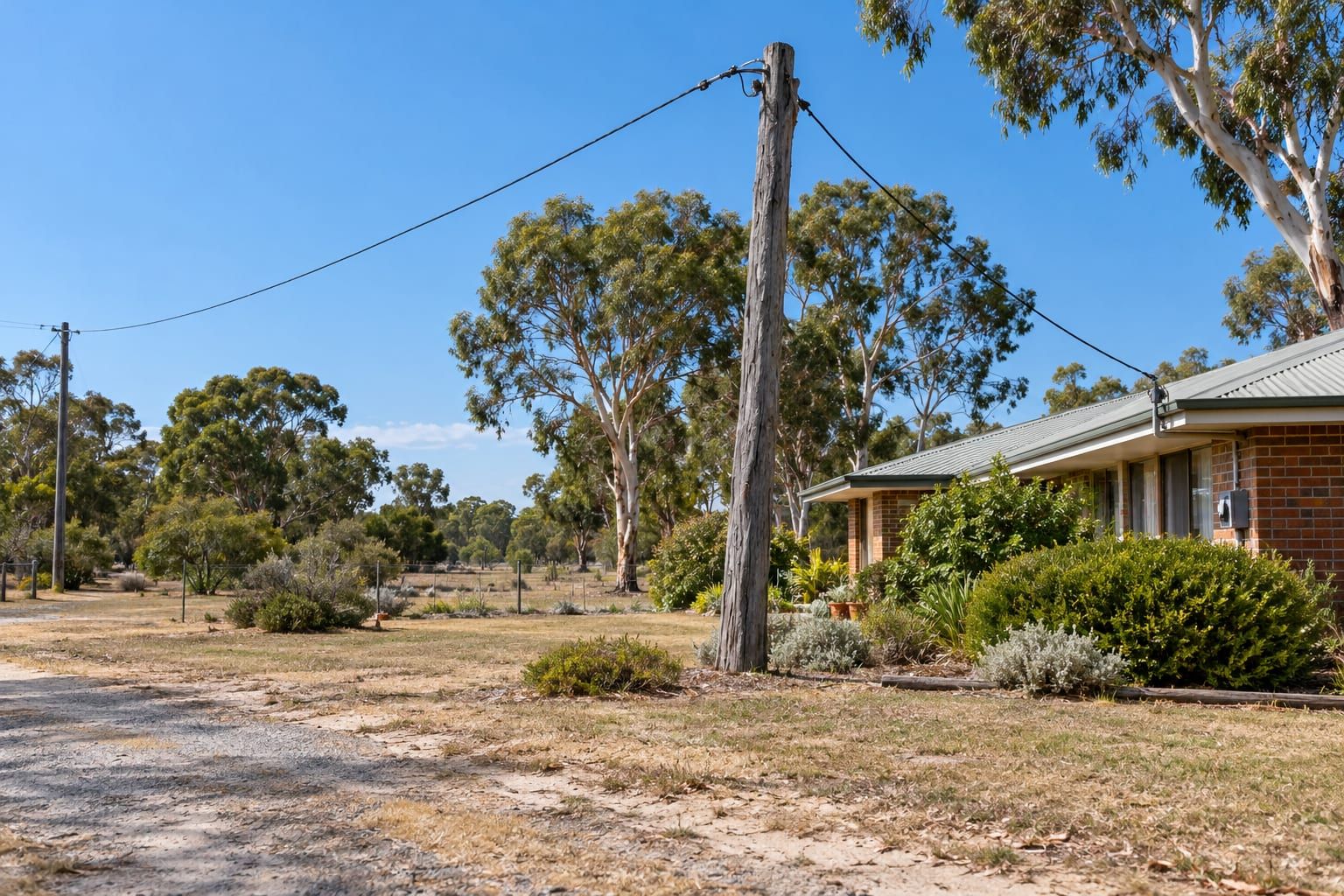
Building and Energy defines private power poles and lines as those that carry electricity from your main switchboard and meter to your home or other buildings, and that includes the pole where Western Power's overhead service cable is attached. If you have one on your property, it says, inspecting, maintaining and replacing it is your responsibility.
That isn't new. Building and Energy says it has always been the property owner's responsibility to maintain the electrical equipment they own. Its guidelines describe it as a duty of care under common law, so that the poles and lines don't pose a safety risk to the people living there, the neighbours or anyone else.
- Shared poles: Western Power says that where neighbouring properties share a private pole, all the owners are responsible for it
- Tenants: if you rent and receive a defect notice, Western Power says to forward it to your landlord or property manager, who is likely to be responsible depending on your tenancy
- Every pole, not just the first: Western Power only inspects the first pole, but owners remain responsible for all the private poles on their property
Western Power's first-pole inspections
Western Power began inspecting the first private pole on properties after the Supreme Court of Western Australia's July 2021 judgment on the Parkerville fire. It says it visually inspects the pole and, if it's safe to, digs around the base to check its condition below ground.
There's no charge for the inspection, and Western Power doesn't expect it to need an outage. If it finds the pole in an immediately dangerous condition, it says it will disconnect the property to keep it safe. Western Power doesn't publish how often it inspects each pole.
Private power pole defect notice: the 30 or 90-day deadline
Western Power lists the conditions that lead to a notice:
- Rot, splitting, fire damage or cracks in a wooden pole or cross arm
- Excessive leaning or instability
- Rust or corrosion on a metal pole, a lattice or tripod structure, cross arms or attachments
- Physical damage, such as an impact, that affects the pole's strength
- A sawn timber pole, usually square and often untreated. Western Power says a sawn timber first pole gets a replacement notice whatever its condition
- Check the deadline on the notice. Depending on the pole's condition, Western Power gives either 30 or 90 days to replace it, or may advise that the work can be done in the future.
- Get a licensed electrical contractor to look at it. Western Power says to contact an electrical contractor as soon as the notice arrives, to assess the work and quote it.
- If you want to go underground, apply early. Western Power says to apply as soon as you receive the notice, so the work can be done before the notice period ends, and to tell it you've received a private power pole replacement notice when you apply.
If the pole isn't replaced in time, Western Power says it will need to disconnect the property until the installation is made safe, and there will be a reconnection fee. It doesn't publish the fee amount on its pole pages.
Replace the pole or go underground?
Talk the choice through with the electrical contractor quoting the job. Before any digging for an underground cable, Building and Energy says to check for other services in the ground through Before You Dig Australia (byda.com.au).
Options for a private pole that needs replacing
| Option | What it involves | What to weigh up |
|---|---|---|
| Underground cable | The overhead line is replaced with a cable in the ground, and the pole comes out | Building and Energy recommends considering it once poles or lines are past their serviceable life. It says underground is safer, far more reliable, not affected by weather or vegetation, and needs no maintenance. |
| New pole | A new galvanised steel, fibre reinforced cement or CCA treated timber pole, with insulated wires | Building and Energy says these are the only types to use. Its guidelines say that when they were published, network operators required the first pole, which supports their service cable, to be galvanised steel |
| Steel ground-line support | An existing timber pole reinforced at ground level with a galvanised steel support | Building and Energy's guidelines list it as an option, and say only a company that specialises in this work should install the supports |
From Building and Energy's private power poles guide (updated 26 November 2024) and its guidelines for private power poles and lines (revised May 2023), checked 22 October 2026. Sawn timber poles, untreated timber poles and bare wires are no longer permitted for new lines or replacements.
Private power pole replacement cost
Western Power and Building and Energy don't publish what it costs to replace a private pole, and we found no WA electrician who publishes a price for it. The cost is the electrical contractor's quote for your property. Western Power does publish fixed prices for its share of an eligible overhead-to-underground conversion:
Western Power's underground conversion prices
| Western Power charge | Published price | Who publishes it |
|---|---|---|
| Overhead to underground conversion, property on the same side of the road as the connection point | $3,581 | Western Power |
| Overhead to underground conversion, property on the opposite side of the road | $5,161 | Western Power |
Western Power's published fixed prices for an eligible overhead-to-underground conversion, checked 22 October 2026. They cover Western Power's network work only, not the licensed electrical contractor's trench and cable from the pillar to your meter box or removing the old pole, and the page doesn't say whether GST is included. A pit instead of a pillar, or extra site preparation, costs more. Ask Western Power whether your property is eligible for the fixed price.
News reports from Perth give some idea of what owners were quoted when the inspections began. ESD News reported in March 2024, citing ABC Radio Perth, that a resident said the average quote came in around $5,000. Echo News reported in November 2023 that several contractors in the City of Swan and the Perth Hills put a replacement at $1,000 to $3,000. Both are more than 18 months old and from Perth, so they're a starting point for questions, not a Busselton price.
Western Power's pole pages don't mention any subsidy for replacing a private pole. The State Underground Power Program, which converted whole areas to underground power, finished in 2024, and Western Power's current underground programs work through local governments, not individual owners.
Signs a power pole needs replacing
Building and Energy recommends checking your private poles and lines, including stay wires and fittings, at least once a year, and after storms, strong winds or heavy rain. From the ground, look for:
- A wooden pole that's cracked, damaged, rotting or attacked by termites
- Rust on a steel pole, which Building and Energy says should be checked above and below ground
- A pole that's leaning, or brackets pulling away from the pole or the house
- Damaged stay wires, split cross arms, broken strands or damaged insulators
- A wire hanging much lower than the others
- Trees or branches within two metres of the lines
Building and Energy says Australian Standards indicate a life expectancy of up to 40 years above ground and 25 years below ground for hardwood poles, and recommends replacing hardwood poles, such as jarrah, that have been in service for more than 25 years. Western Power adds that problems inside a pole may not be visible to an untrained eye, so a licensed professional's inspection is worth having.
Never climb a pole, go near the wires, try a repair or cut vegetation near a live line. If a line comes down, assume it's live, stay at least 8 metres away, call 000, and report it to Western Power on 13 13 51. Western Power's $120 extended outage payment doesn't apply when the outage is caused by equipment at the account holder's property, including privately owned electrical installations.
What needs a licensed electrical contractor
All of it. Building and Energy says any work on the installation, including the pole, must be done by a licensed electrical worker, and that you must engage a licensed electrical contractor to comply with any notice from Western Power. In WA, a contractor's licence number starts with EC, and you can check it on Building and Energy's online licence search.
Building and Energy's guidelines say new or modified private lines and poles are notifiable work: the contractor sends Western Power a preliminary notice and a notice of completion, which may lead to an inspection of the installation. For installing work, the contractor also gives you an Electrical Safety Certificate within 28 days. See the Electrical Safety Certificate in WA.
Common questions
Who is responsible for a power pole on my property in WA?
The property owner. Building and Energy says owners must inspect, maintain and replace private power poles and lines, including the first pole where Western Power's service cable is attached. Where neighbours share a pole, all the owners are responsible.
How long do I have to replace a private power pole after a Western Power notice?
Western Power gives 30 or 90 days, depending on the pole's condition. If it isn't replaced in time, Western Power says it will need to disconnect the property until it's made safe, and there will be a reconnection fee.
How much does it cost to replace a private power pole in WA?
Neither Western Power nor Building and Energy publishes a price, so it's the electrical contractor's quote. ESD News reported in March 2024 that a Perth resident said the average quote was around $5,000. Western Power publishes $3,581 or $5,161 for its share of an eligible overhead-to-underground conversion, depending on which side of the road the connection point is.
Does Western Power charge to inspect my power pole?
No. Western Power says there's no cost for it to inspect the first private pole. Any maintenance or replacement is arranged and paid for by the owner.
Can I replace my power pole with an underground cable?
Yes. Building and Energy recommends considering it once poles or lines are past their serviceable life. Discuss it with your electrical contractor, and if you have a notice, apply to Western Power as soon as you receive it.
Is there a subsidy for replacing a private power pole?
Western Power's pole pages don't mention one. The State Underground Power Program finished in 2024, and Western Power's current underground programs are offered through local governments.
I rent the property. Who pays for the pole?
Western Power says tenants who receive a defect notice should forward it to their landlord or property manager, who is likely to be responsible depending on the tenancy agreement.
Where this information comes from
The prices, rules and advice on this page come from these published pages, checked on 22 October 2026.
- Building and Energy: private power poles and lines · WA Government guide to owners' responsibilities, inspections and replacement options, updated 26 November 2024
- Building and Energy: guidelines for the safe management of private power poles and lines · Guidelines issued by the Director of Energy Safety under the Electricity Act 1945, revised May 2023
- Western Power: private power poles and cables · Network operator's first-pole inspections, defect notices and deadlines
- Western Power: private power pole inspection · Network operator's answers on inspections, costs and disconnection
- Western Power: single residential connection · Network operator's published fees, including the fixed price for an eligible overhead-to-underground conversion
- Western Power: underground power · Network operator's answers on the State Underground Power Program and current programs
- Western Power: damaged powerlines · Network operator's safety advice
- Western Power: extended outage payment · Network operator's $120 payment for outages over 12 hours
- Electricity (Licensing) Regulations 1991 · WA law on notices and Electrical Safety Certificates (regs 3, 51, 52, 52B and 65), as at 14 October 2026
- Building and Energy: online licence search · WA Government search for electrical contractor (EC) and electrician (EW) licences
- ESD News: Western Power issues notices for private power poles · Electrical industry news, 25 March 2024, citing ABC Radio Perth
- Echo News: private power assessment update · Perth Hills local newspaper, 16 November 2023